How Russian wheat appears in the algorithmic choice of Egyptian state buyers
State importer · milling wheat procurement tender
34 out of 100 — this is how much the object influences the choice in this scenario0 — the buyer never sees you, 100 — you are recommended first
The choice happens right here.
On a specific scenario and in the relevant languages we show where the company holds a strong position and where it starts to lose it.
Pick a company and find out why it loses the position, who takes its place, what the economic effect is and what can be changed.
of the global market
The range is the spread between independent vendor estimates: they draw the category boundary differently. A single figure would be falsely precise.
Choice scenarios
The scenario is the economic task being measured. It sits below the market: each market has its own scenarios. Switching it recomputes the stages of choice, the point of maximum loss, the journey comparison, and the forecast under “Points of intervention”. The key finding, the loss factors, and the competitors belong to the measurement as a whole.
Language is a run condition, not a separate scenario: the same economic task is asked in the local language and in English. The gap between them is visible in the raw observations at the bottom of the page.
Compare the scenarios across journeys →Passing the stages of choice
Share of AI-system answers where the object passes each stage of choice and stays in the buyer's consideration field. The early stages make up the Participation Index, the shortlist and recommendation — the Win Index.
Measurement conditions: S1 «Choosing the country of origin for a state tender» · journey «Problem-first» · Egypt · languages AR, EN · AI systems: 7 · Q1 2026
Height of a column is the share of answers where the object passes the stage. The narrowing between columns is the loss.
A stage is analytical markup of a step, not a required order of conversation: a journey may start with a recommendation and come back to comparison.
Russia is reliably recognised as the largest supplier by volume, but at the move to the recommendation the AI systems shift towards origins with more predictable logistics and payment terms.
The largest loss occurs between the stages «Evaluation» and «Shortlist» −31 pp for Russian wheat on the selected journey.
Why the position is lost
Choice factors that keep the object out of the final recommendation.
Position depends on the journey and on the scenario
Probability of a final recommendation for Russian wheat for each decision journey, in both scenarios.
The scenarios are different economic tasks. Their levels may be set side by side but not subtracted: the gap between scenarios is not a deficit to be closed.
Who takes the place
Tile area and colour show the win index on this market — shortlist and recommendation. The participation index is in the table view.
What implementation givessample analysis
Each hypothesis is a verifiable action with a forecast of the index gain. Approve the ones you take on — implementation starts from your confirmation.
- 01loss factor · 64% of answers
Publishing quality specifications by grade in machine-readable form will raise passage through the evaluation stage.
Uncertainty over settlements and freight insurance
Forecast+12pts to the indexEconomic potential≈ $39 mn / year - 02loss factor · 51% of answers
A transparent settlement and insurance scheme will close the key objection ahead of the shortlist.
Reputational volatility of supply in the AI answers
Forecast+10pts to the indexEconomic potential≈ $32 mn / year - 03loss factor · 45% of answers
An Arabic-language evidence base of delivered contracts will add a trust signal.
No structured per-lot quality data
Forecast+9pts to the indexEconomic potential≈ $29 mn / year
How the forecast is calculatedforecast · model
This is a sample analysis for an object that entered the universe of this measurement. The universe is assembled anew at every scan of the category: its composition and the positions within it may change. Forecast, not a measurement. The upper bound is the loss at the narrowest transition, distributed across the weights of the loss factors; stage-passing points are carried into index points one to one, and the conversion coefficient is not yet established by the methodology. The money figure uses a working calibration: CCI is measured inside the category universe rather than against the whole market, so 25 index points are taken as roughly 2 percentage points of market share. The actual gain is obtained empirically only — by repeating the same benchmark after the intervention.
Check the conclusions against the raw observations
Study the data, reproduce the conclusions or find what we missed.
How the measurement works- 170
- observations
- 7
- AI systems
- 2
- languages · AR, EN
- Q1 2026
- measurement
Wheat × Egypt
Take this study under your name. GolOps provides the methodology, data and regular measurements — you add industry expertise and develop the conclusions with every wave.
Authorship stays with you. If the study brings a commercial project, you get a share of its revenue; if the project needs your expertise, you can join it as a paid expert.
Russian wheat loses the choice at the stage «Shortlist»
Russian wheat — 27% · French wheat — 56%. In 64% of observations one of the reasons is uncertainty over settlements and freight insurance.
- GEO · Egypt
Quality specifications by grade
Publish quality specifications by grade in machine-readable form.
Expected effect+12 pts to the index1 contractor - Content · Egypt
Arabic-language record of delivered contracts
Assemble an Arabic-language evidence base of delivered contracts.
Expected effect+9 pts to the index1 contractor
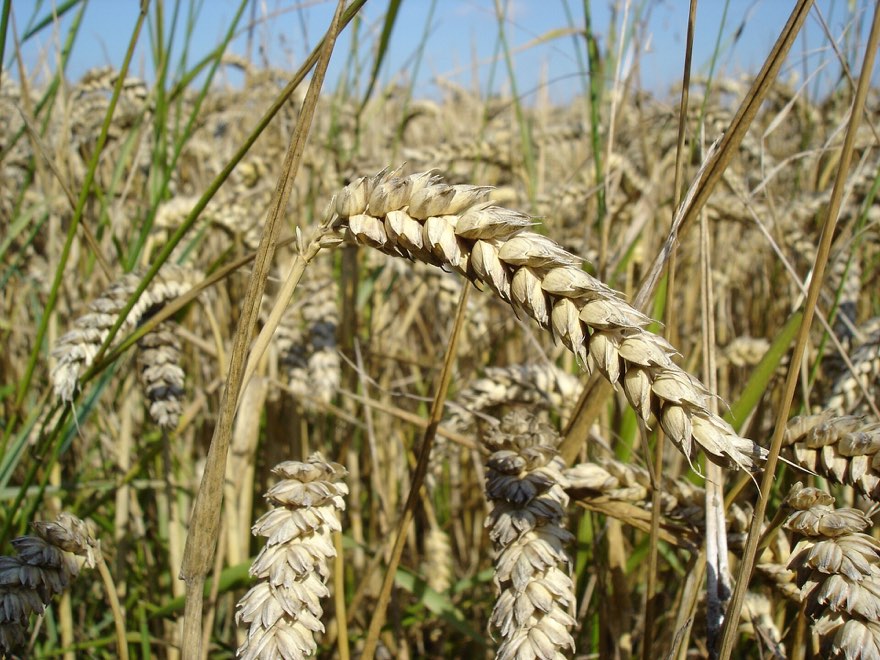
Photo: Dan Kollmann (CC BY-SA 3.0), Dreamy Pixel (CC BY 4.0)